Successful subscription! Thank you for subscribing.
Successful subscription! Thank you for subscribing.
May 19, 2026
What if the most important days of your entire year were right around the corner and you hadn’t planned a single thing for them?
For many Muslims, the 10 days of Dhul Hijjah pass quietly. They get overshadowed by the anticipation of Eid al-Adha or swallowed up by the usual rhythm of daily life. But according to the Quran and the words of the Prophet ﷺ, these are not ordinary days. They are the best days of the year, a concentrated window of mercy that even surpasses the last ten nights of Ramadan in certain respects. Understanding what makes them special and what Allah is actually asking of us during this season, is the first step toward making them count.
Here are 10 things every Muslim should know about these blessed days.
1. Allah Swore by These Days in the Quran
When Allah takes an oath by something in the Quran, it is a sign of its immense significance. In Surah Al-Fajr, He says:
وَالْفَجْرِ وَلَيَالٍ عَشْرٍ
“By the dawn and by the ten nights.” (89:1-2) [1]
The majority of scholars of tafsir, including Ibn Kathir and al-Tabari, identify these ten nights as the first ten days of Dhul Hijjah. Allah chose to open an entire Surah with an oath by these days. That tells us something about their weight. These are not just nice days to be aware of. They are days Allah Himself drew our attention to.
2. Good Deeds in These Days Are More Beloved to Allah Than at Any Other Time
The Prophet ﷺ said:
“There are no days in which righteous deeds are more beloved to Allah than these ten days.”
The companions asked, “Not even jihad in the way of Allah?” He replied, “Not even jihad in the way of Allah, except for a man who goes out with his life and wealth and returns with neither.”
This hadith is reported in Sahih al-Bukhari (969) from Ibn ‘Abbas (RA). A version with the wording “more beloved to Allah” is also recorded in Sunan Ibn Majah (1727), graded Sahih by Darussalam. [2]
This hadith puts the 10 days of Dhul Hijjah in a category of their own. It is not just that good deeds are rewarded during this time. It is that Allah loves those deeds more during these days than during any other period of the year. Every act of worship, every small act of kindness, every dollar given in charity carries more weight right now.
3. They Combine the Greatest Acts of Worship in Islam
One of the reasons scholars have highlighted the uniqueness of these days is that they bring together the major acts of worship in a way no other time does. Salah, fasting, charity, dhikr and Hajj all converge in the first ten days of Dhul Hijjah. Ibn Hajar al-Asqalani noted in Fath al-Bari (his commentary on Sahih al-Bukhari) that this combination is not found in any other period, which is part of what gives these days their unmatched status. It is as if Allah gathered every door of worship and opened them all at once.
4. Fasting the Day of Arafah Wipes Away Two Years of Sins
While fasting is recommended throughout the first nine days, fasting on the Day of Arafah (the 9th of Dhul Hijjah) carries a specific promise. The Prophet ﷺ said:
“Fasting the Day of Arafah expiates the sins of the previous year and the coming year.”
This hadith is narrated by Abu Qatadah al-Ansari (RA) and recorded in Sahih Muslim (1162b). [3]
Two full years of minor sins wiped away for a single day of fasting. For those not performing Hajj, this is one of the most accessible and impactful acts of worship available during this season. It is a mercy from Allah that such a tremendous reward does not require a plane ticket or a life savings. It only requires the intention to fast.
5. The Day of Arafah Is the Single Greatest Day of the Year
The Prophet ﷺ said:
“There is no day on which Allah frees more people from the Fire than the Day of Arafah.”
This hadith is narrated by ‘A’ishah (RA) and recorded in Sahih Muslim (1348). [4]
The 9th of Dhul Hijjah is not just the best day of these ten. It is the best day of the entire year. Allah draws near to those standing in worship and He boasts of His servants to the angels. Whether you are on Hajj or at home, the Day of Arafah is a day to pour your heart into du’aa, to ask for forgiveness and to seek closeness with your Lord. Do not let this day pass like any other.
6. Dhikr Is One of the Simplest and Most Rewarded Acts During These Days
The Prophet ﷺ encouraged Muslims to increase their remembrance of Allah during the 10 days of Dhul Hijjah, specifically through takbeer (Allahu Akbar), tahleel (La ilaha illallah) and tahmeed (Alhamdulillah). A hadith narrated by Ibn ‘Abbas (RA) in Musnad Ahmad states: “There are no days that are greater before Allah or in which good deeds are more beloved to Him than these ten days, so increase in them your tahleel, takbeer and tahmeed.” This hadith has been graded Sahih by Ahmad Shakir.
These are words that sit lightly on the tongue but carry enormous weight on the scale of deeds. The companions, including Ibn Umar (RA) and Abu Hurairah (RA), would go to the marketplace during these days and raise their voices in takbeer, prompting others to join them. Imam al-Bukhari records this practice as a chapter heading in Kitab al-‘Idayn (The Two Festivals) in his Sahih. It was not something they kept private. It was a public declaration that these days matter. [5]
7. Charity in These Days Is Not Just About Money
Because good deeds carry more weight in this season, charity given during the first ten days of Dhul Hijjah is amplified in its reward. But charity in the Quran is not limited to writing a check. In his tafsir of Surah Al-Balad, Ustadh Nouman Ali Khan highlights a striking image: Allah describes believers as people who should be rushing, competing, even pushing past each other to help someone in difficulty, the way people rush for a sale or fight for a seat. The word Allah uses is iqtiham (اقْتَحَمَ) and it carries the imagery of squeezing through a crowd to get to something valuable (90:11).[6]
During these blessed days, ask yourself: who around me is carrying something heavy? A family member buried under debt, a neighbor who lost their job, a friend who is quietly falling apart. Helping them is not a side project. According to these ayat, it is the steep path that faith demands.
8. The Takbeer of Dhul Hijjah Is a Forgotten Sunnah
From the 1st of Dhul Hijjah through the days of Tashreeq (the 11th, 12th and 13th), Muslims are encouraged to recite the takbeer frequently:
Allahu Akbar, Allahu Akbar, La ilaha illallah, Allahu Akbar, Allahu Akbar, wa lillahil hamd.
This practice has largely faded from the daily lives of many Muslims, yet it was a defining feature of how the early generations marked this season. Reviving this Sunnah is one of the simplest ways to fill your days with remembrance and set the spiritual tone for yourself and those around you.
9. Hajj Is a Rehearsal for Judgment Day
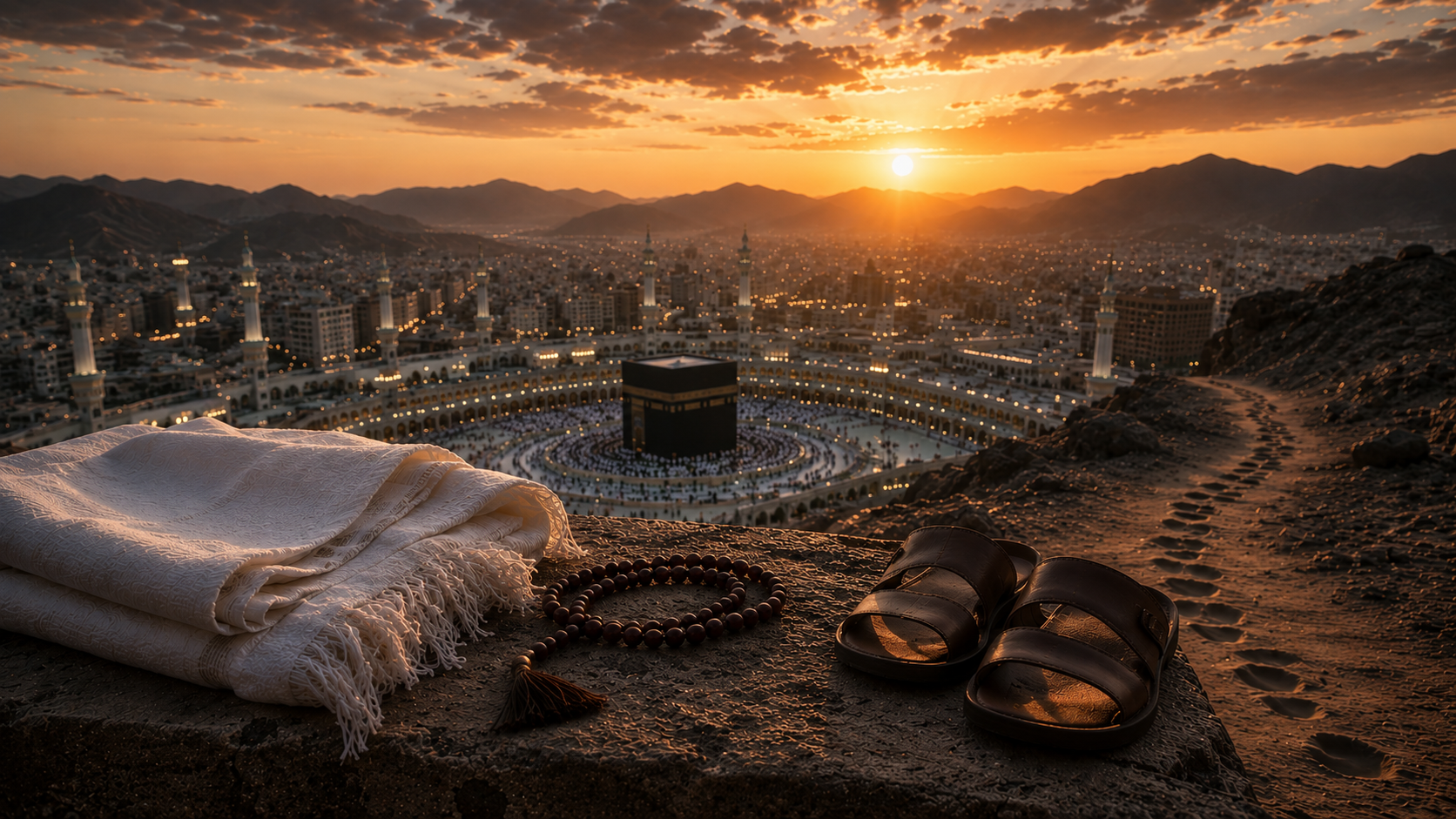
The 10 days of Dhul Hijjah are inseparable from Hajj. Even if you are not making the journey this year, understanding what Hajj represents deepens the meaning of every act of worship you do in this season.
Ustadh Nouman Ali Khan describes the purpose of Hajj as nothing less than getting a new life. A person has accumulated the weight of sins, sadness and grievance over the years, and Allah gives them the opportunity to face Him, like they will on Judgment Day, but ahead of it. It is preparation. A dress rehearsal for the moment that truly counts.
This is why Allah says in Surah Maryam:
وَكُلُّهُمْ آتِيهِ يَوْمَ الْقِيَامَةِ فَرْدًا
“All of them will come to Him on the Day of Resurrection, individually.” (19:95) [7]
Hajj is one of the biggest gatherings on earth, yet the pilgrim has never felt more alone. It is just you and Allah. Your personal space is gone, your status is irrelevant, the recognition you carried before you left means nothing. As Ustadh Nouman puts it, you go there to be meaningless. That is the point. Allah chose a barren, uncomfortable, unworldly place for this meeting. Makkah, had it not been for the Ka’bah, would not compete with any vacation destination in the world. You do not go there for comfort. You go there because it mirrors the barren reality of what Judgment Day will look like, when Allah flattens the earth and no life remains.
Allah says about this sacred state:
فَلَا رَفَثَ وَلَا فُسُوقَ وَلَا جِدَالَ فِي الْحَجِّ
“There is no obscenity, no wickedness and no arguing during Hajj.” (2:197) [8]
There is no “Hey, you can’t do that to me.” There is none of that. Because the pilgrim has surrendered every claim to self-importance. That is literally what you go there for. Whether you are standing on Arafah this year or praying from your living room, the spirit of these ten days asks the same question: are you willing to stand before Allah with nothing, stripped of every title and excuse, ready to begin again?
10. The Real Exercise Is Restraining the Self
At the end of Surah Al-Fajr, after taking the oath by the dawn, the ten nights and the even and the odd, Allah poses a question:
هَلْ فِي ذَٰلِكَ قَسَمٌ لِذِي حِجْرٍ
“Is there not in that a sufficient oath for those who possess hijr?” (89:5) [9]
Ustadh Nouman Ali Khan draws attention to the word hijr. In Arabic, hijr is one of the words for the intellect, and it comes from the same root as hajar (stone) and shares its origin with al-Hajar al-Aswad (the Black Stone). But hijr does not just mean intelligence. It means a barrier, something that blocks and restrains. Your emotions, your temper, your greed and your desires have no limits. They want what they want. The intellect, if you truly possess hijr, is what stops them and brings them under control.
This, Ustadh Nouman explains, is the real exercise of Hajj and the spirit of these ten days. We all carry animal desires inside of us: greed, lust, temptation, impatience. They are wild and unchecked. The entire journey of Hajj is designed to put all of those in check, to place a restraint on every one of them. You cannot argue. You cannot demand your comfort. You cannot act on impulse. You submit.
Even if you are not on Hajj, the 10 days of Dhul Hijjah are a training ground for the same discipline. Every time you hold your tongue when someone provokes you, every time you fast when your body resists, every time you give when your nafs tells you to keep, you are exercising hijr. You are building the barrier that separates a believer from someone who simply follows every impulse.
The 10 days of Dhul Hijjah are a gift. They are a concentrated season of mercy that Allah has placed in your calendar every single year. The question is not whether the opportunity exists. The question is what you will do with it, not just in your personal worship, but in how you restrain yourself, how you discipline your heart, and how you prepare for the Day you will stand before Allah with nothing but your deeds.
If you want to go deeper into the Quran’s vision for what it means to be a believer during this season and every season, explore Bayyinah TV. Let the words of Allah reshape not just what you do, but who you become.
Notes
[1] Al-Quran, 89:1-2 — https://quran.com/en/al-fajr/1-2
[2] Sahih al-Bukhari 969; Sunan Ibn Majah 1727 — https://sunnah.com/bukhari:969 | https://sunnah.com/ibnmajah:1727
[3] Sahih Muslim 1162b — https://sunnah.com/muslim:1162b
[4] Sahih Muslim 1348 — https://sunnah.com/muslim:1348
[5] Sahih al-Bukhari, Kitab al-‘Idayn (chapter heading on takbeer) — https://sunnah.com/bukhari:969
[6] Al-Quran, 90:11 — https://quran.com/al-balad/11
[7] Al-Quran, 19:95 — https://quran.com/en/maryam/95
[8] Al-Quran, 2:197 — https://quran.com/2/197
[9] Al-Quran, 89:5 — https://quran.com/89/5

At Bayyinah, we are dedicated to helping you connect directly with the words of Allah beyond translation. Founded by Ustadh Nouman Ali Khan, our mission is to create transformative experiences that deepen your understanding and engagement with the Quran.
Study the Quran and Arabic in a systematic and personalized way through Bayyinah TV. Get started today for free.
Check out our newest articles, fresh off the press and ready for you to dive into!