Successful subscription! Thank you for subscribing.
Successful subscription! Thank you for subscribing.

October 18, 2026
The Test
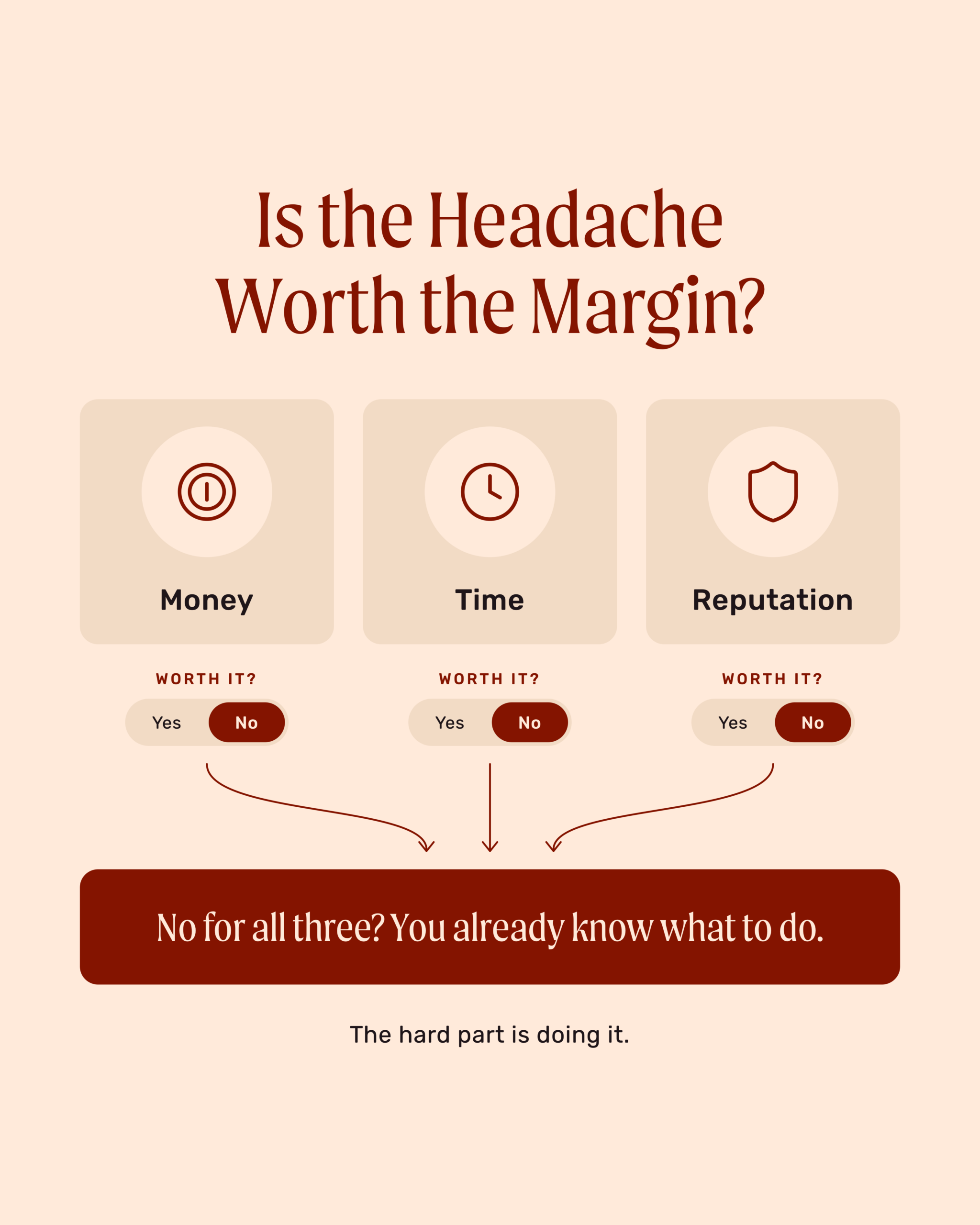
Here’s the part people don’t expect: most of the things we’ve stopped weren’t failing. Some were working, just not well enough to justify what they were costing us. And “cost” is not always money. Sometimes it’s the staff hours spent on a headache that could have gone somewhere else, sometimes it’s the reputation risk of a product or program that’s 80% good, sometimes it’s the mental load of managing something that was never core to what we do. The test we’ve started using is pretty blunt: is the headache worth the margin, in money, time or reputation? If the answer is no for all three, you already know what to do. The hard part is doing it.
Merch
We added mugs and t-shirts to our Shopify store because we were already on Shopify for books and the print-on-demand plugin made it look easy. And for a while it was fine. People ordered, items shipped, nobody complained loudly.
But the complaints that did come in were the worst kind: quality issues we couldn’t fix ourselves because we weren’t touching the product. Refunds were a separate workflow from our book refunds. Margins were low, meaning we were absorbing a lot of hassle for not much return and every customer service exchange was time our team wasn’t spending on something that actually builds Bayyinah.
So we pulled it. We still print t-shirts for events because that’s a different supply chain and a different purpose. But the website? No more merch for now. We’re looking at journals, honestly, because they sit closer to the books category and our audience of students already buys the books. Stationery is in the same conversation. The difference is that those feel like they serve a real need rather than “we have a Shopify store, let’s fill it.”
The why behind the decision: if the product creates a customer service burden that outweighs what it earns you and you can’t fix the root problem, stop selling it.
The Internship: Obligations You Can’t Honor
In summer 2025 we ran what we called an internship program. Students completed real projects. Some of the work was genuinely good, but then the emails started arriving from employers asking for references and students were listing Bayyinah on LinkedIn under work experience in ways that implied traditional supervision, reviews, all of it. We weren’t equipped to provide any of that.
Our standard reply became: this was an educational and training initiative, not a traditional internship. We said it over and over. And every time we said it, it confirmed that the gap between what we’d offered and what people reasonably inferred had been there from the start.
We replaced it with a volunteer form, project-based, with certificates of completion that say exactly what the person did. No ambiguity about what Bayyinah is and isn’t claiming to have provided. The door isn’t closed to students contributing, it’s just honest now.
The why: if a program creates obligations you can’t honor, you’re not doing people a favor by keeping it running. You’re setting them up to cite something that won’t hold up when it matters.
Volunteers: Shrink the Stakes, Not the Idea
Okay so volunteer projects are their own category because the failure mode is different. We weren’t misrepresenting anything, the work just kept losing momentum a few weeks in. Life happens, priorities shift and volunteers aren’t employees, they don’t owe you continuity.
What changed wasn’t the decision to use volunteers. It was how we scoped the work. Now we only bring on volunteers for non-urgent, non-critical, project-based tasks with a clear start and a clear end. Reviewing AI-generated subtitles and notes, for example, is a real contribution, a contained one, and it doesn’t break anything if someone needs to step back mid-way because we don’t build anything critical around it.
We also stopped posting general calls and started reaching out to people who actually suit the specific project. Smaller asks, better matches, less disappointment on both sides.
How to Kill Something Well
When we pull something, we try to do three things. Tell people plainly, meaning no vague “we’re pausing this to make it better” language if we actually don’t know when or whether it’s coming back. Replace it with something honest, meaning if there’s an alternative that serves the real need, offer it. And keep the door open on the underlying idea if it has merit. Journals might come back. Volunteers aren’t gone. The specific broken version of the thing is what we stopped, not the category.
What we try not to do is let something limp along because shutting it down feels like admitting a mistake. It is admitting a mistake. That’s the point.
The Question We Ask Every Quarter
We’ve started putting one question on the internal agenda every quarter: what should we stop? Not what should we fix, not what should we do next. What should we stop.
It’s a different muscle. Building and launching feels productive. Killing something feels like loss, even when keeping it is the thing that’s actually costing you. The quarterly question makes stopping a normal part of the workflow instead of a crisis response.
It doesn’t have to be dramatic. Sometimes the answer is “the merch plugin.” Sometimes it’s a recurring email sequence that nobody opens. Sometimes it’s a process that three people on the team are working around instead of working with. You ask the question, you look at what the thing is actually costing you against what it’s returning and you make the call.
If you’re sitting on something right now that you already know the answer to, that’s probably enough information.
If this kind of behind-the-scenes thinking is useful to you, join the Bayyinah Works newsletter at bayyinah.com/works.

At Bayyinah, we are dedicated to helping you connect directly with the words of Allah beyond translation. Founded by Ustadh Nouman Ali Khan, our mission is to create transformative experiences that deepen your understanding and engagement with the Quran.
Study the Quran and Arabic in a systematic and personalized way through Bayyinah TV. Get started today for free.
Check out our newest articles, fresh off the press and ready for you to dive into!